ID Practicum: Scenario-Based Learning Platform for Early-Career IDs
Project Overview
Project Description
A scenario-based enablement platform designed to help graduate students and early-career instructional designers practice real workplace decisions through simulations, microlearning, and role-based pathways.
Learning Modality
Web-based learning platform
My Role
Instructional Designer
Audience
Early-career instructional designers
Duration
Feb 2026 - May 2026
Tools
Articulate Storyline
Articulate Rise
Figma
Web-based modules
The Enablement Gap
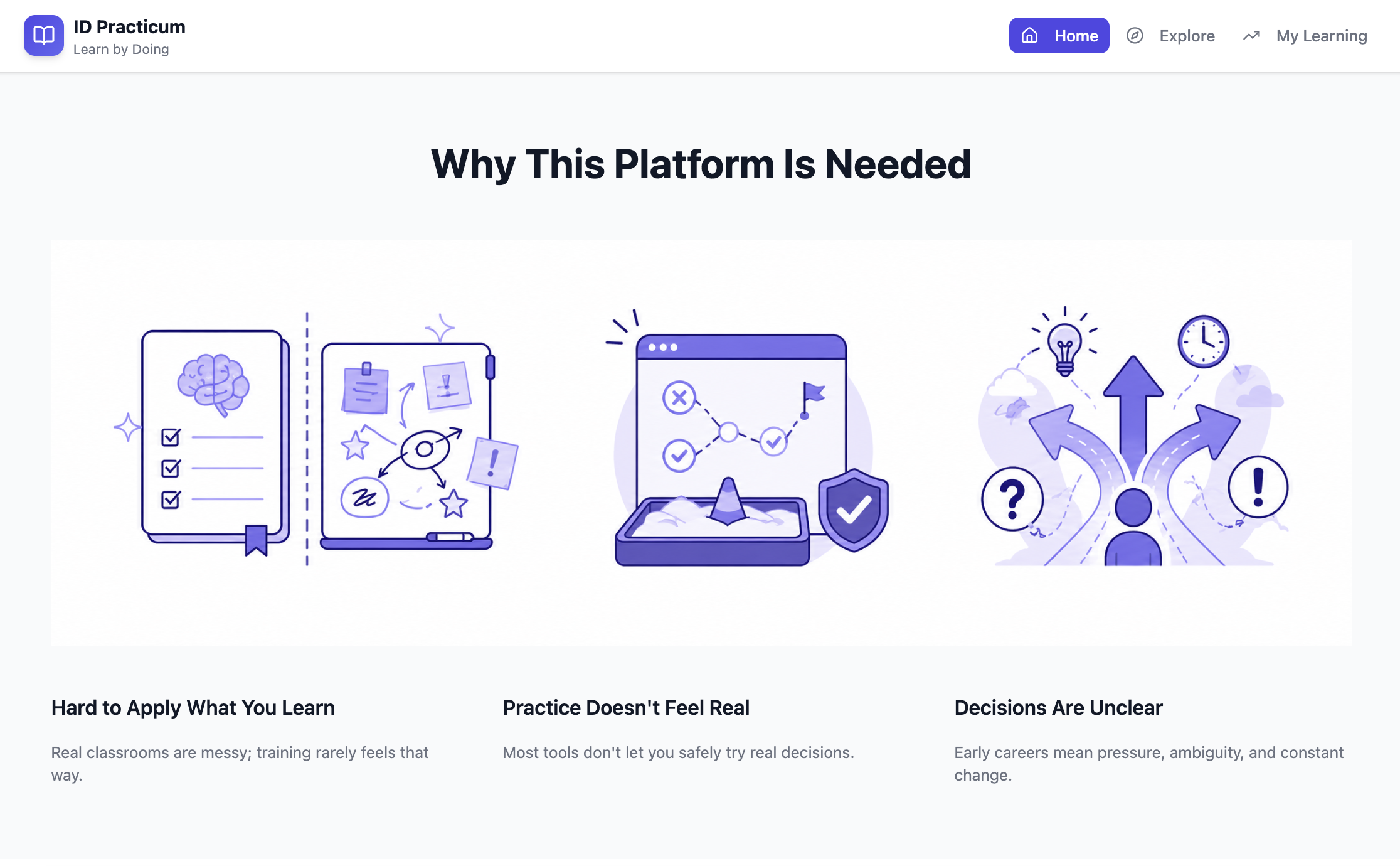
Theory-to-Practice Disconnect
Novice instructional designers often learn formal design models but struggle to apply them effectively in messy workplace contexts.
Limited Realistic Practice
Traditional preparation often teaches processes and tools without giving learners safe opportunities to practice real project decisions.
Decision-Making Under Uncertainty
Early-career IDs must often respond to stakeholder pressure, shifting requirements, and ambiguous project conditions.
Research
Behavior change goal
Literature review
Online discussions from novice IDs
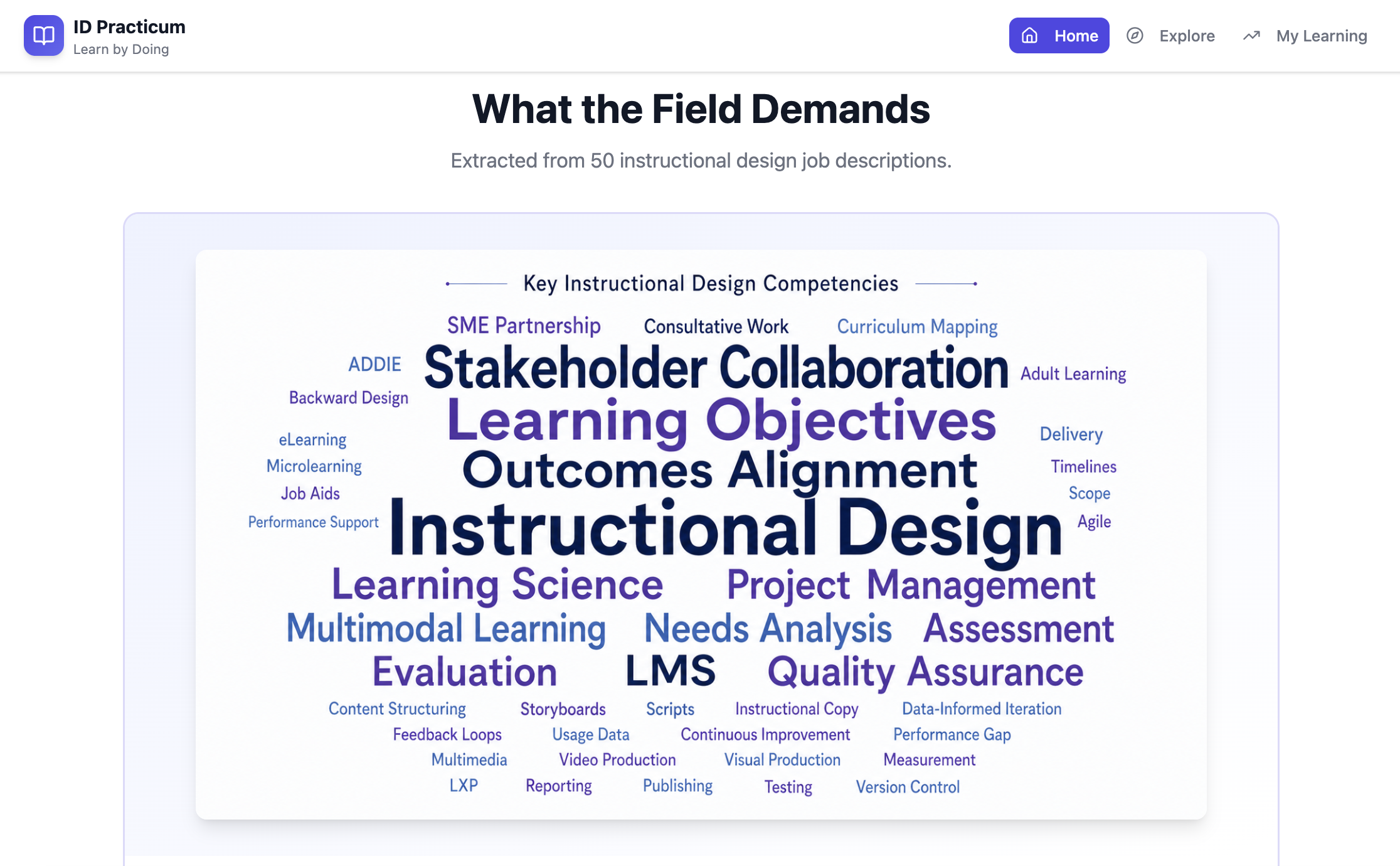
50 U.S.-based instructional design job descriptions
Key Insight
The curriculum should not be organized only around textbook topics or tools. It should be organized around practical competency areas employers actually ask for.
Platform Design
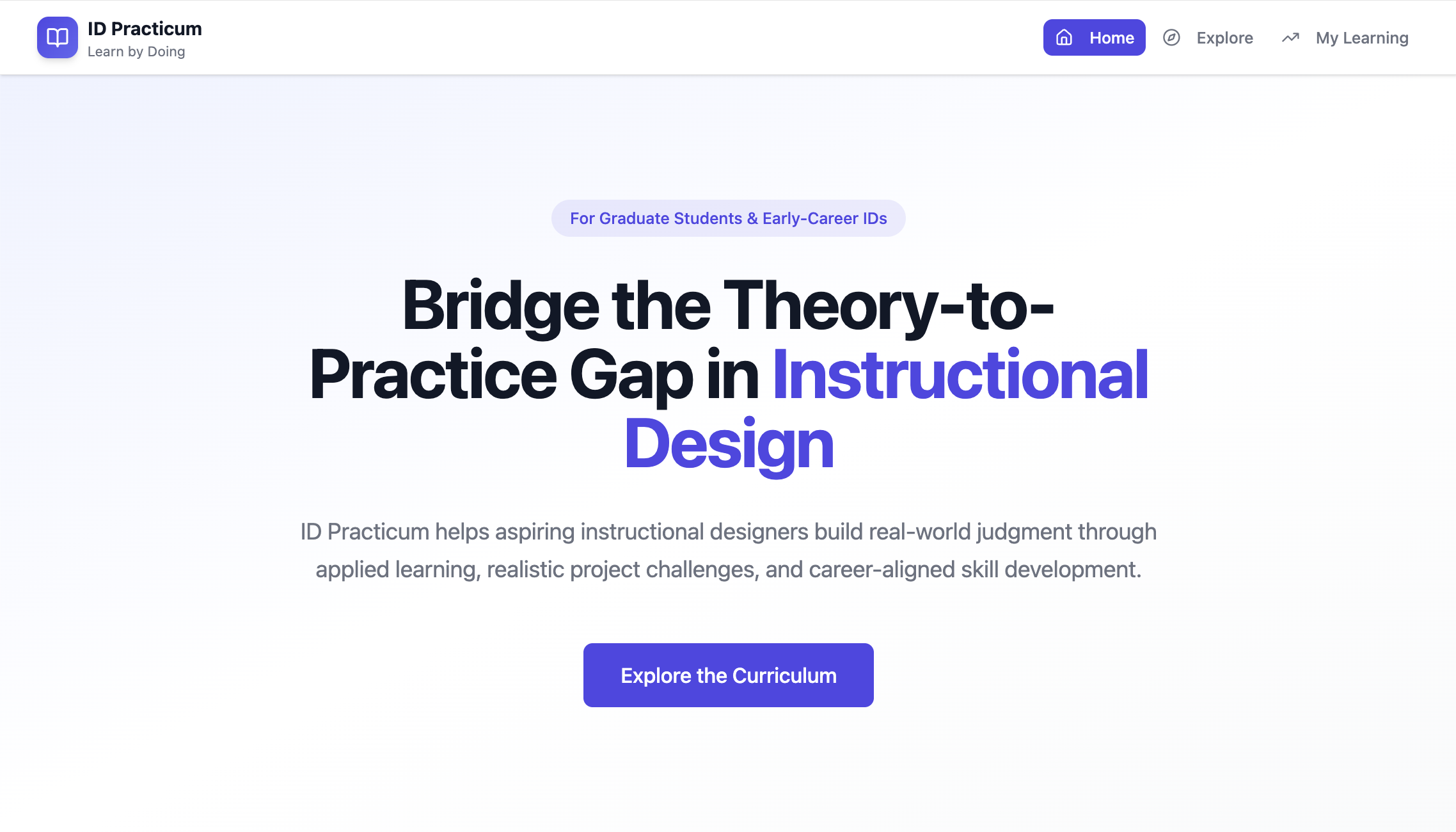
Home: introduces the theory-to-practice gap and learning model
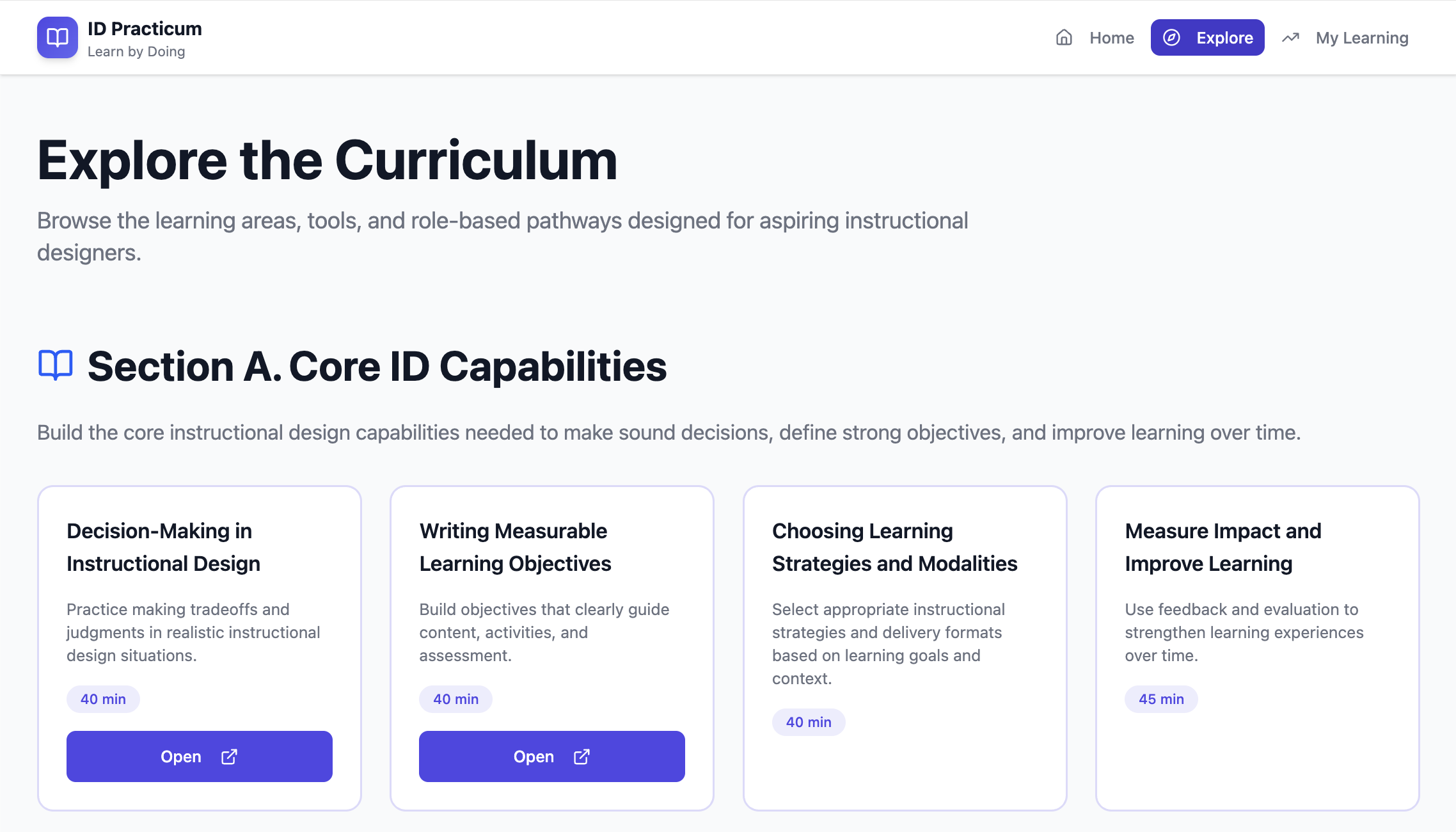
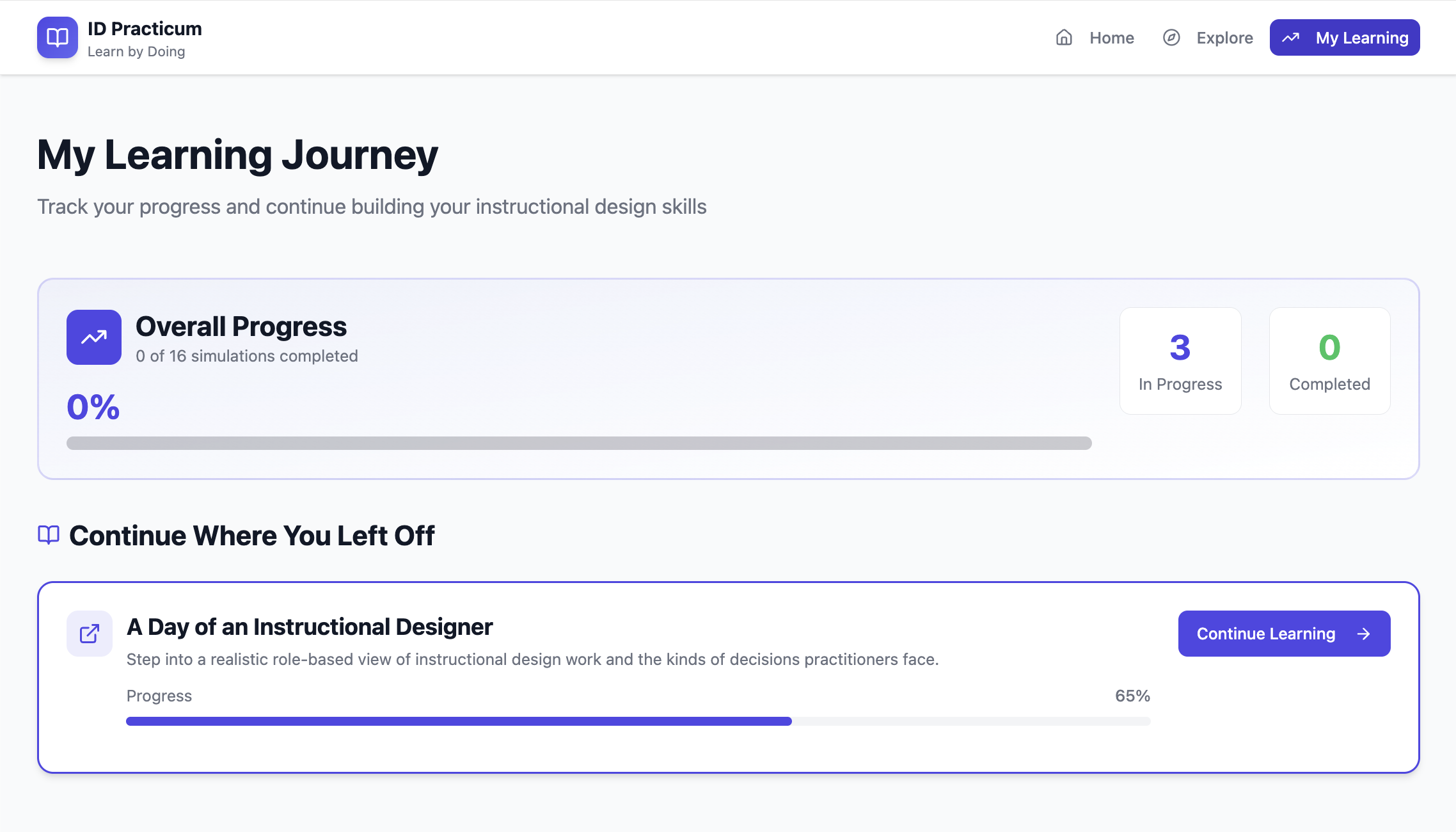
The platform includes three primary areas:
Explore: organizes the curriculum into practical capability areas
My Learning: supports progress tracking and recommended next steps
Learning Experience Design
Scenario-Based Simulation
Used for workplace judgment and decision-making practice.
Web-Based Practice Activities
Used for interactive practice and lightweight skill application.
Game-Based Learning
Used for structured concepts, frameworks, and tool walkthroughs.
Progress Tracking
Used for self-regulated learning and recommended next steps.
Testing, Outcomes & Reflection
Tested with novice instructional designers
Used feedback to improve UI, course flow, and instruction clarity
Testing & Iteration
Presented at showcase with around 100 attendees
Around 25 people interacted with the product and provided feedback
Selected by the professor as teaching material for a Columbia instructional design course.
Outcomes
This project changed how I approach learning design as performance preparation.
I learned to start from real workplace demands, not just content topics.
Tool choice should follow learning function: simulation for judgment, microlearning for structure, dashboard for self-regulation.