Increasing Vegetable Intake in a 3rd-Grade ICT Classroom
Project Overview
Project Description
A data-informed nutrition learning intervention designed to encourage elementary students to try vegetables through experiential tasting, interactive games, and goal-setting activities that support behavior change.
Learning Modality
Instructor-led classroom session
My Role
Instructional Designer & Facilitator
Audience
Third graders in a bilingual NYC public school
ICT classroom (students with varied disabilities)
Duration
Sep 2025 - Dec 2025
Tools
Canva
Figma
Lovable
Google Slides
DESIGN Online (LMS)
The Problem
Research Methods
Literature Review
Survey
Interview
Observation
Research Insights
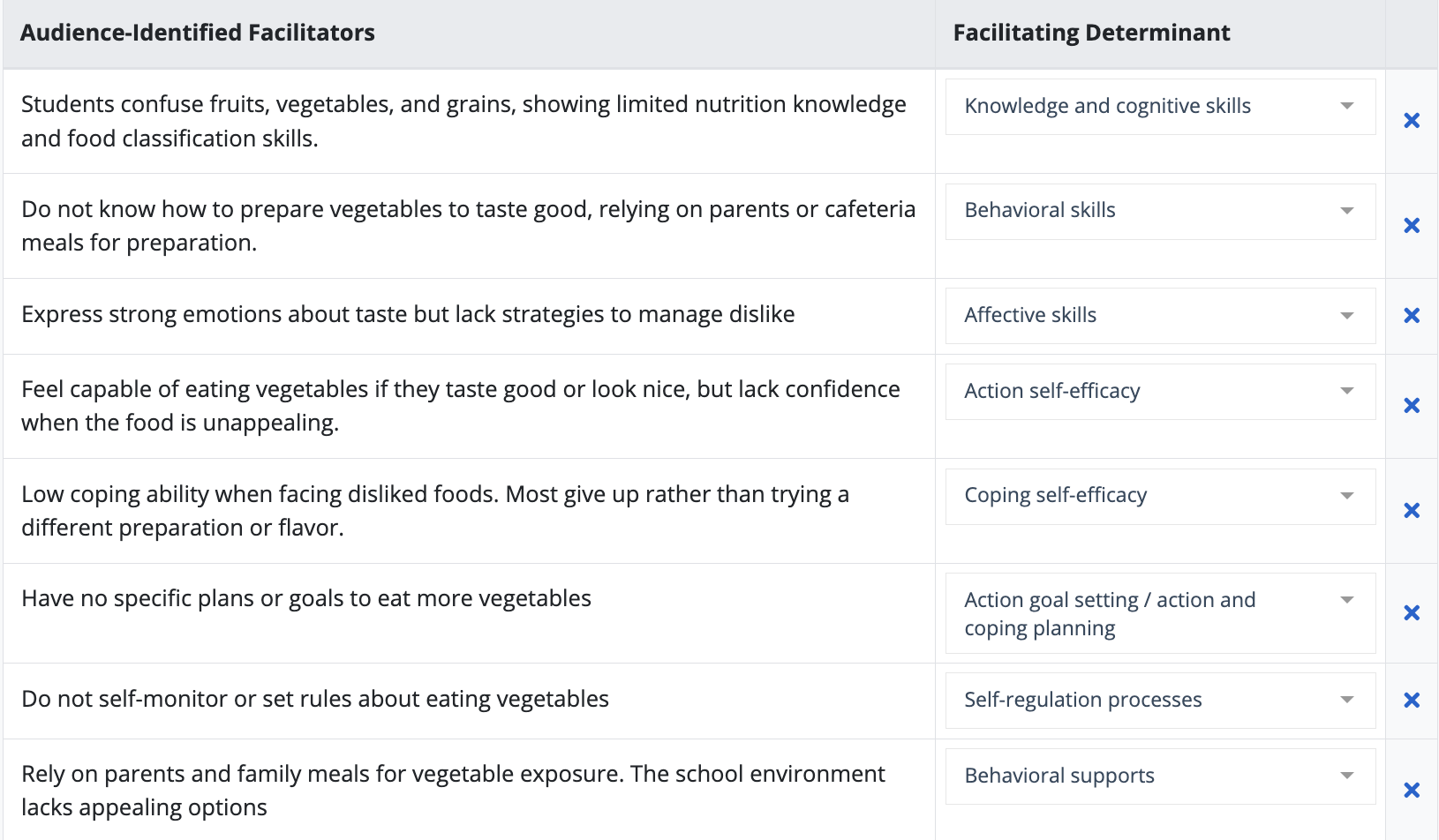
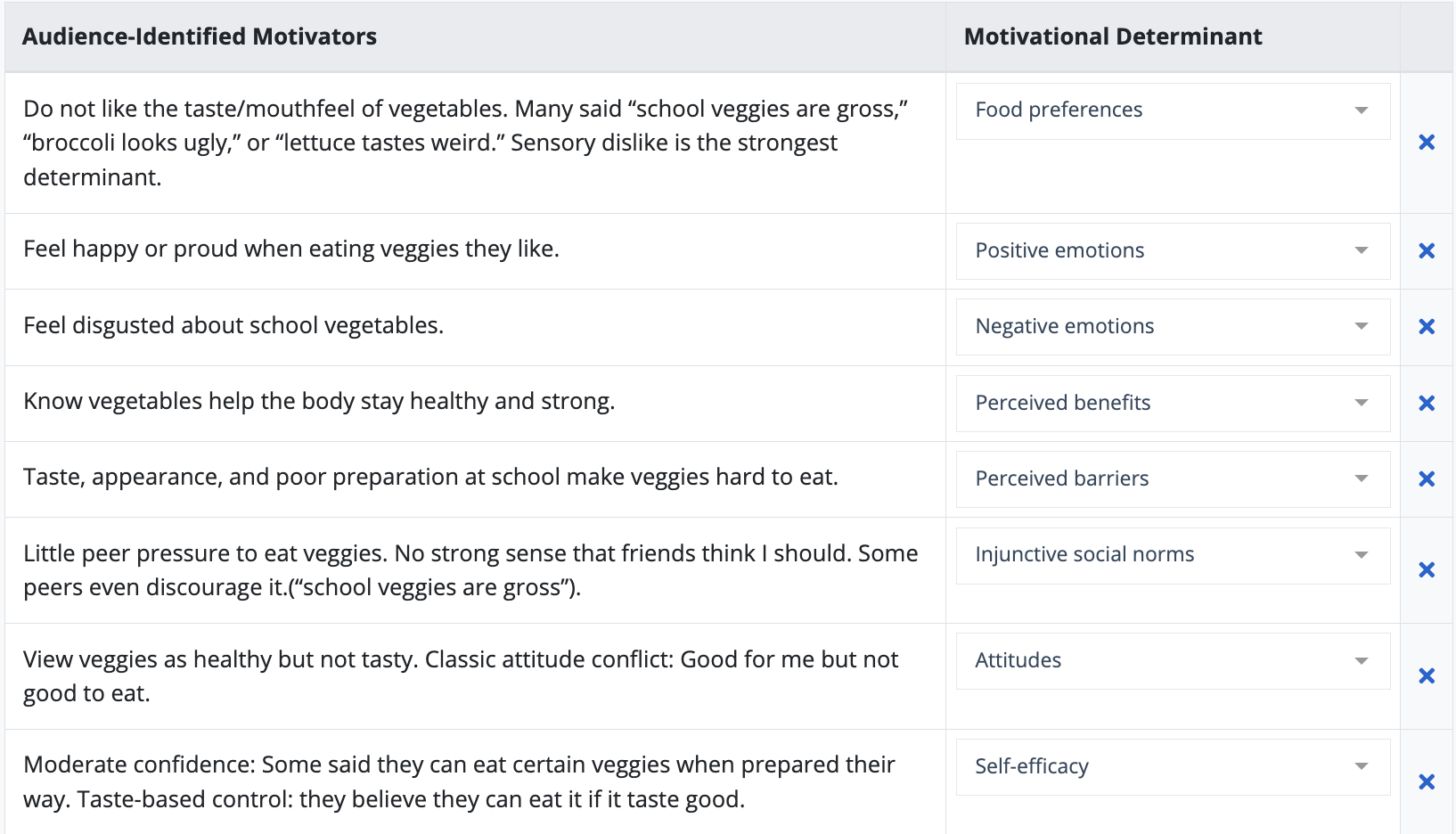
Students know vegetables are healthy, but rarely eat them
Taste and texture are the primary barriers
School meals strongly shape negative perceptions
Motivation is polarized among students
Behavioral Determinants
Learning Objectives
Behavior change goal
Identify vegetables and distinguish them from fruits and grains.
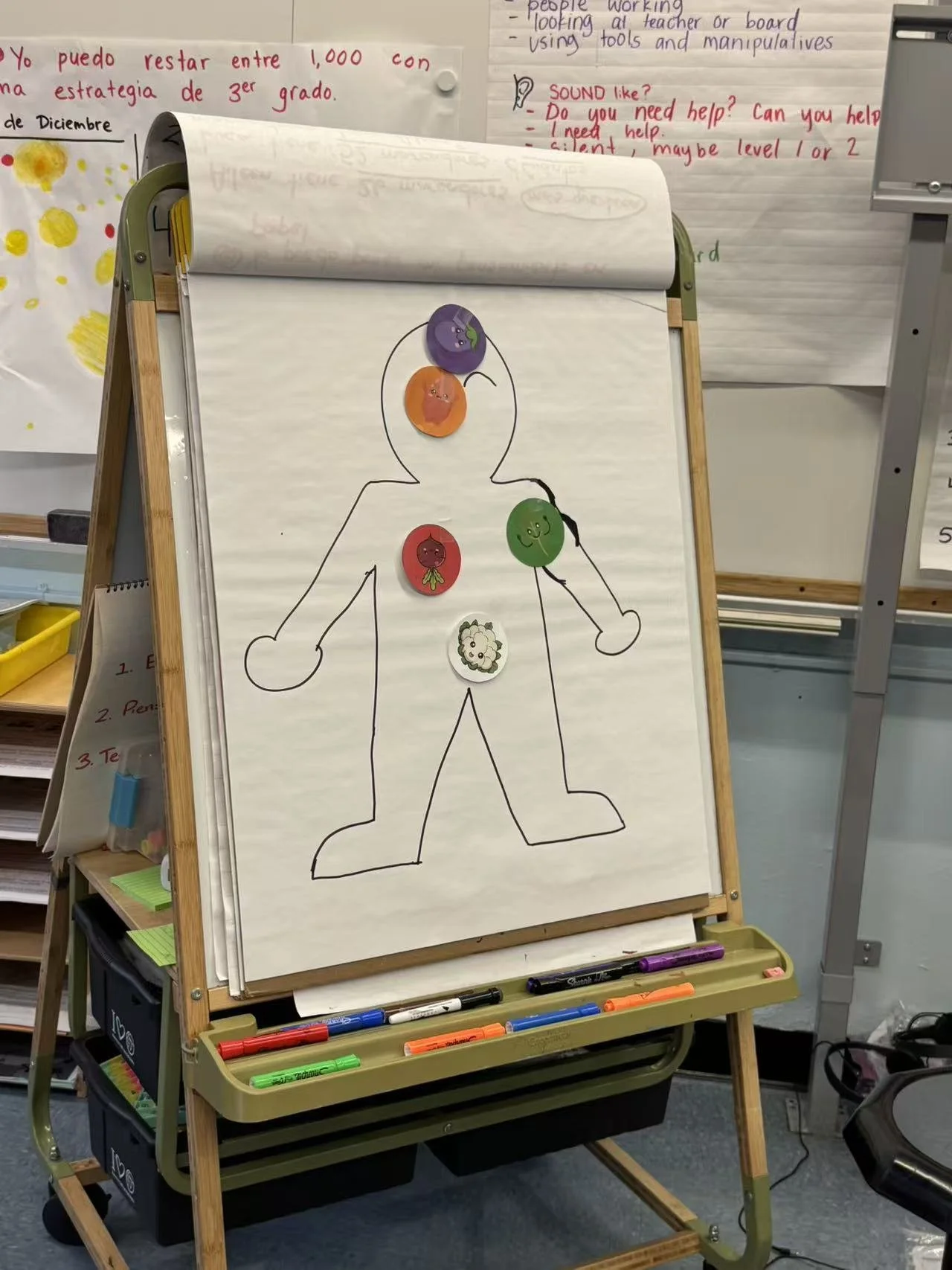
Explain the health benefits of different-colored vegetables.
Try new vegetables during the tasting activity.
Reflect on their attitudes toward vegetables.
Success metrics
Number and variety of vegetables students tried.
Participation in learning activities.
Exit reflections indicating willingness to try vegetables.
The learning intervention was designed around four instructional principles to address students' sensory barriers, engagement challenges, and diverse learning needs.
Design Strategy
Experiential Learning
Hands-on tasting activities allowed students to directly experience vegetables through taste, helping address sensory barriers.
Universal Design for Learning (UDL)
Activities incorporated multiple modes of engagement, representation, and expression to support diverse learners in the ICT classroom.
Game-Based Learning
Interactive games were incorporated to increase engagement and create a playful environment that encouraged participation and curiosity.
Goal Setting & Reflection
Students set personal goals for trying vegetables and reflected on their experiences, supporting motivation and long-term behavior change.
Learning Activities
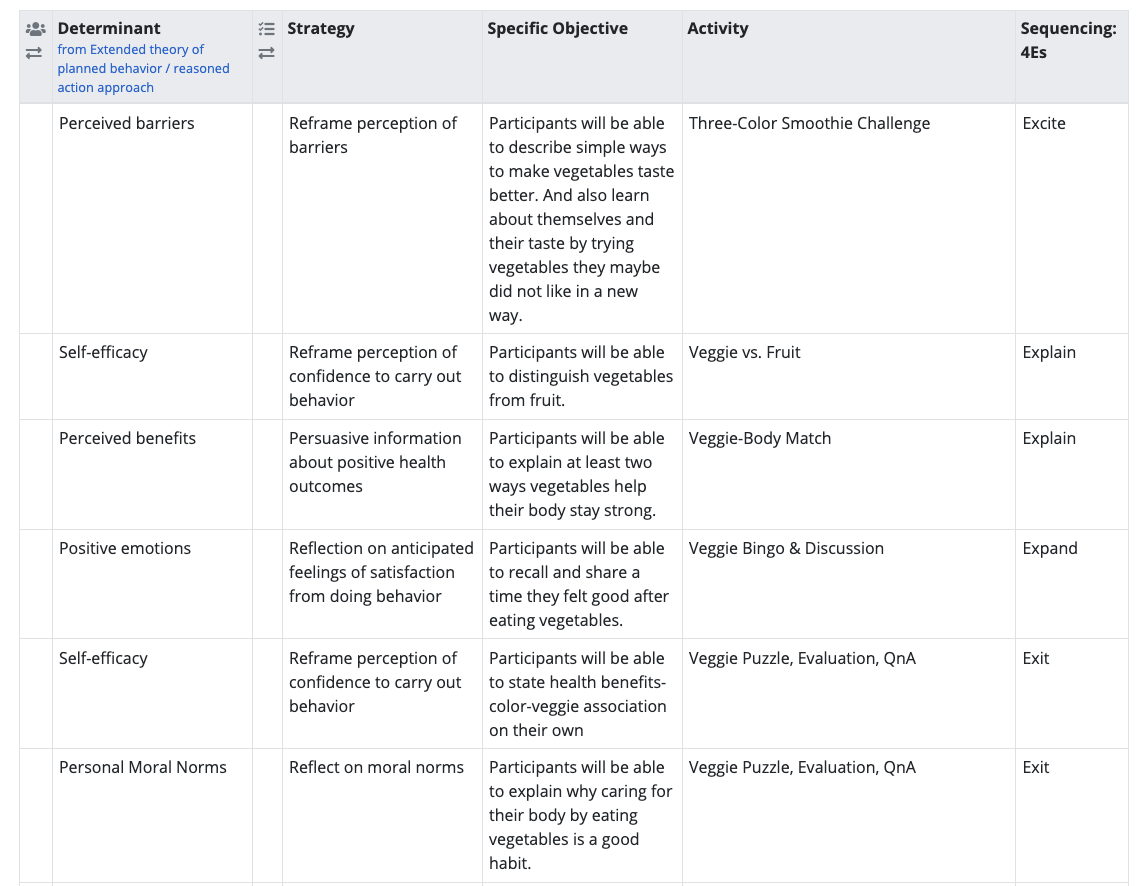
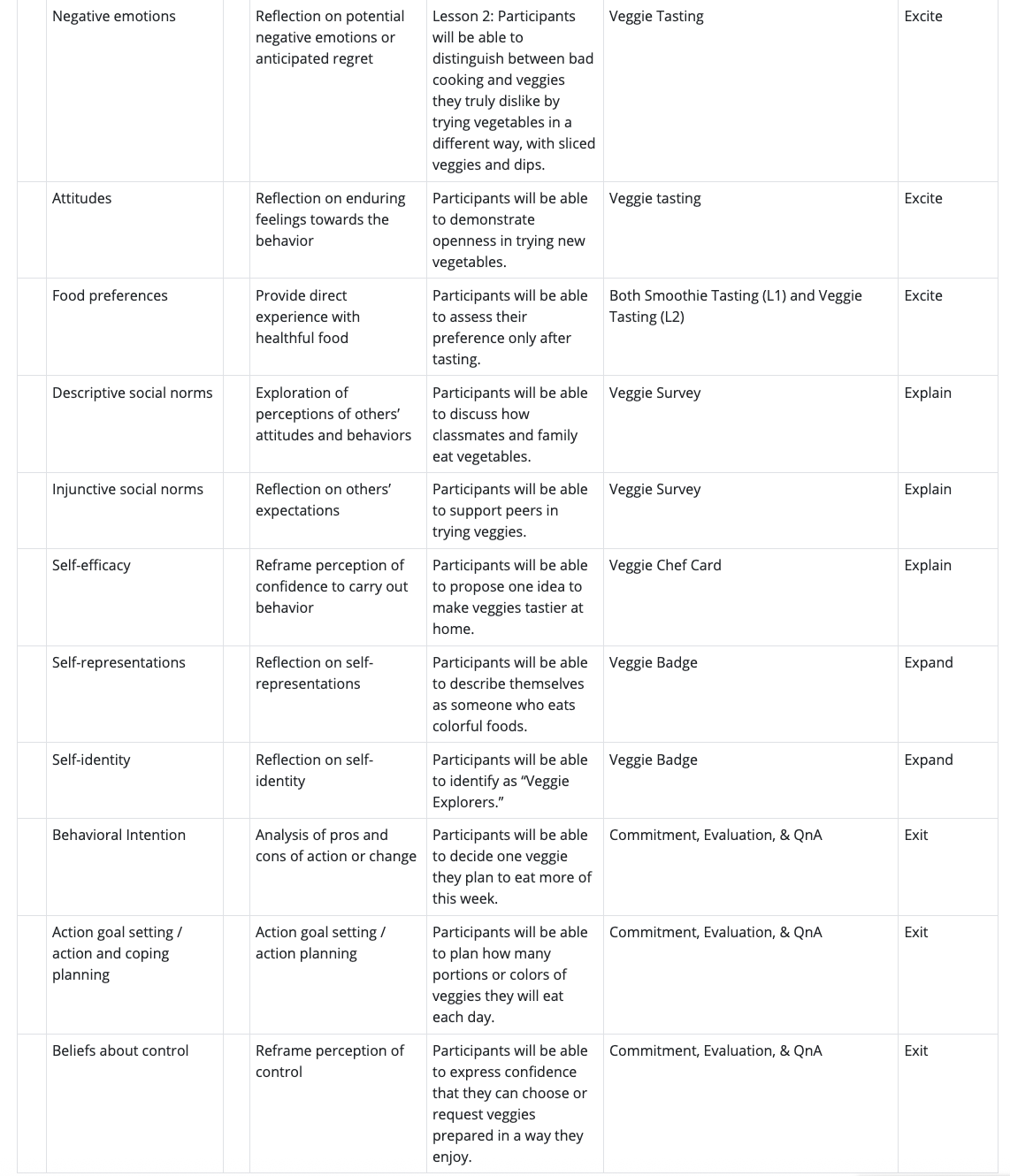
I structured the experience using a 4Es sequence: Excite → Explain → Expand → Exit.
Lesson 1: Understanding Vegetables
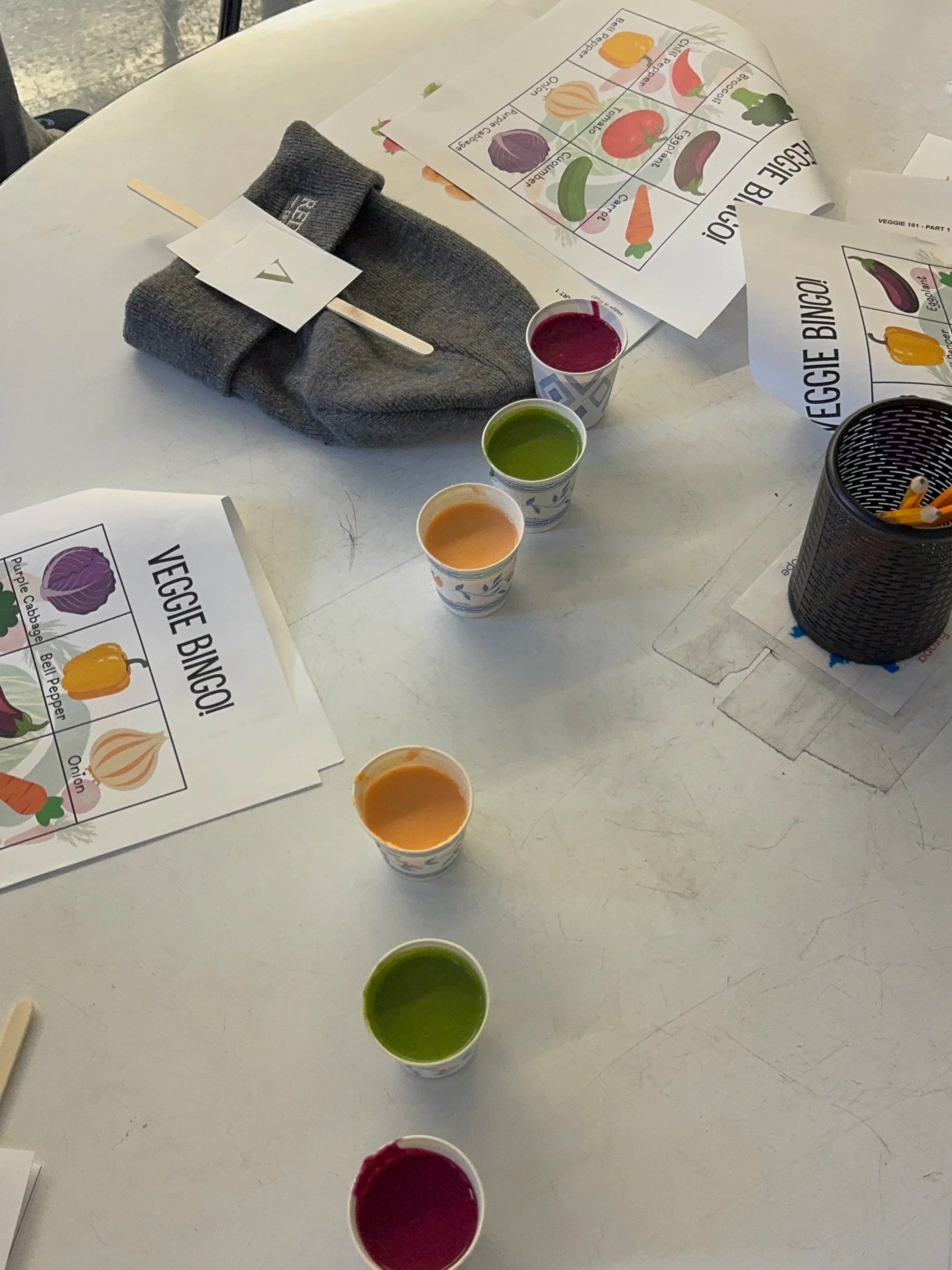
Excite Three-Color Smoothie Challenge
Explain Veggie vs. Fruit Game
Expand Veggie Bingo & Discussion
Exit Veggie Puzzle & Q&A
Lesson 2: Trying Vegetables
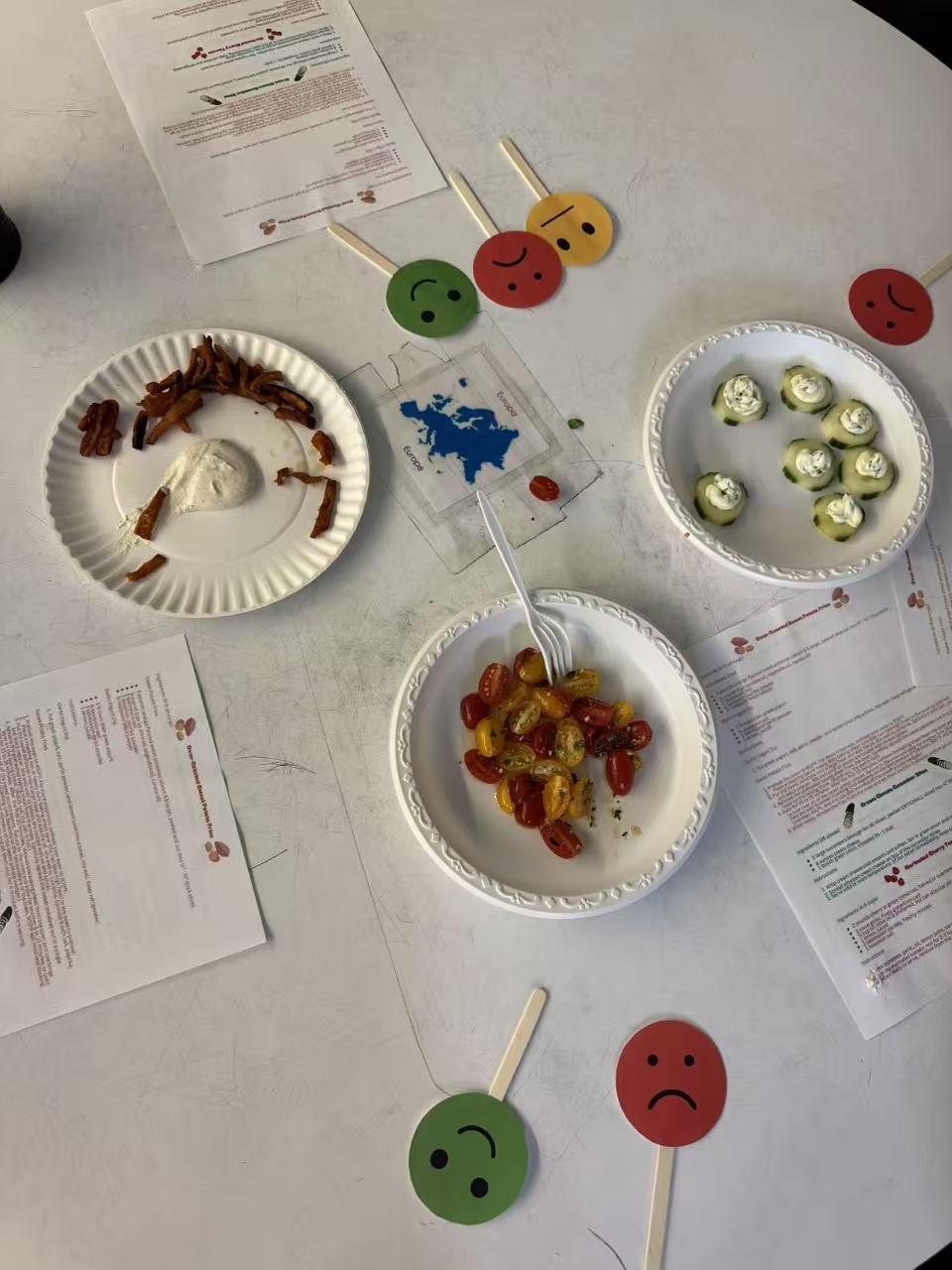
Excite Veggie Tasting Activity
Explain Veggie Survey & Discussion
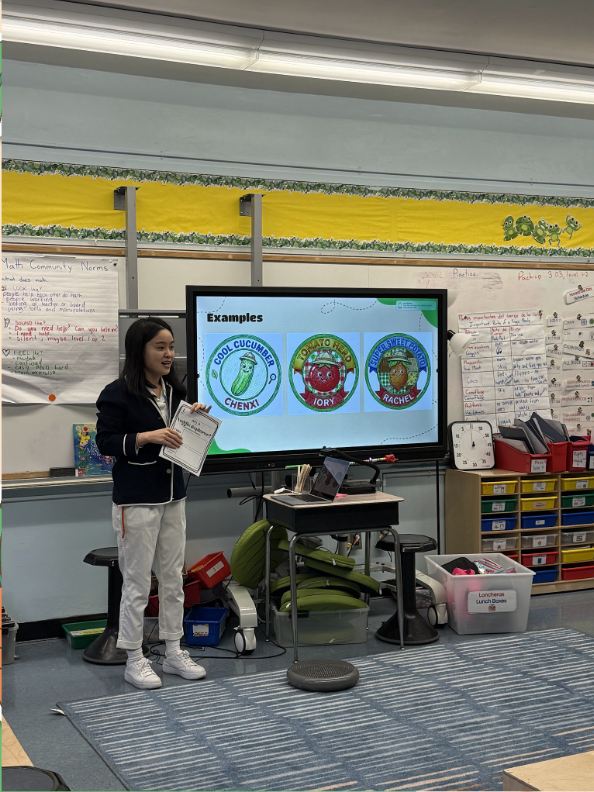
Expand Veggie Chef Card
Exit Commitment & Reflection
Implementation
The learning session was implemented in a small-group ICT classroom with third-grade students.
Students participated in hands-on tasting activities, games, and team discussions, which created a supportive environment for exploring new foods.
Visual aids, simplified instructions, and interactive materials were used to support learners with diverse language and learning needs.
Evaluation
Students were highly engaged during tasting and game-based activities. Most students actively participated in discussions and hands-on tasks.
Student Engagement
11/18 students tried vegetables they initially reported disliking. This suggests that hands-on tasting helped reduce sensory barriers.
Behavior Indicators
Exit intention cards indicated that some students were willing to try vegetables again in the future.
Attitude Change
Reflection
Hands-on tasting activities were particularly effective in addressing sensory barriers and encouraging curiosity.
What worked
Taste-based resistance remained a major barrier, especially for vegetables associated with negative school meal experiences.
Challenges
Future iterations could include repeated tasting opportunities and family involvement to support long-term behavior change.