The Recommendation Lab: AI Literacy Through Algorithmic Decision-Making
Project Overview
Project Description
The Recommendation Lab is a board game prototype designed to help learners understand how recommendation systems work through algorithmic decision-making, platform tradeoffs, and responsible AI scenarios.
Learning Modality
Board game
My Role
Learning Experience Designer
Audience
Learners interested in digital literacy, media literacy, and AI ethics
Duration
Oct 2024 - Dec 2024
The Challenge
Recommendation systems are often invisible to users. Learners may understand that algorithms influence what they see, but they rarely experience the tradeoffs platform operators make between engagement, trust, compliance, user interests, and business pressure.
Core Metrics System
Game System Design
Players balance three platform metrics:
User Engagement
User Trust
Compliance
Event & Consequence System
Event cards introduce real-world pressures such as policy updates, misinformation risks, privacy incidents, platform scandals, and market competition. These events help learners see how recommendation decisions are shaped by more than user preference alone.
Card System
User Interest Cards
Content Cards
Algorithm Cards
Event Cards
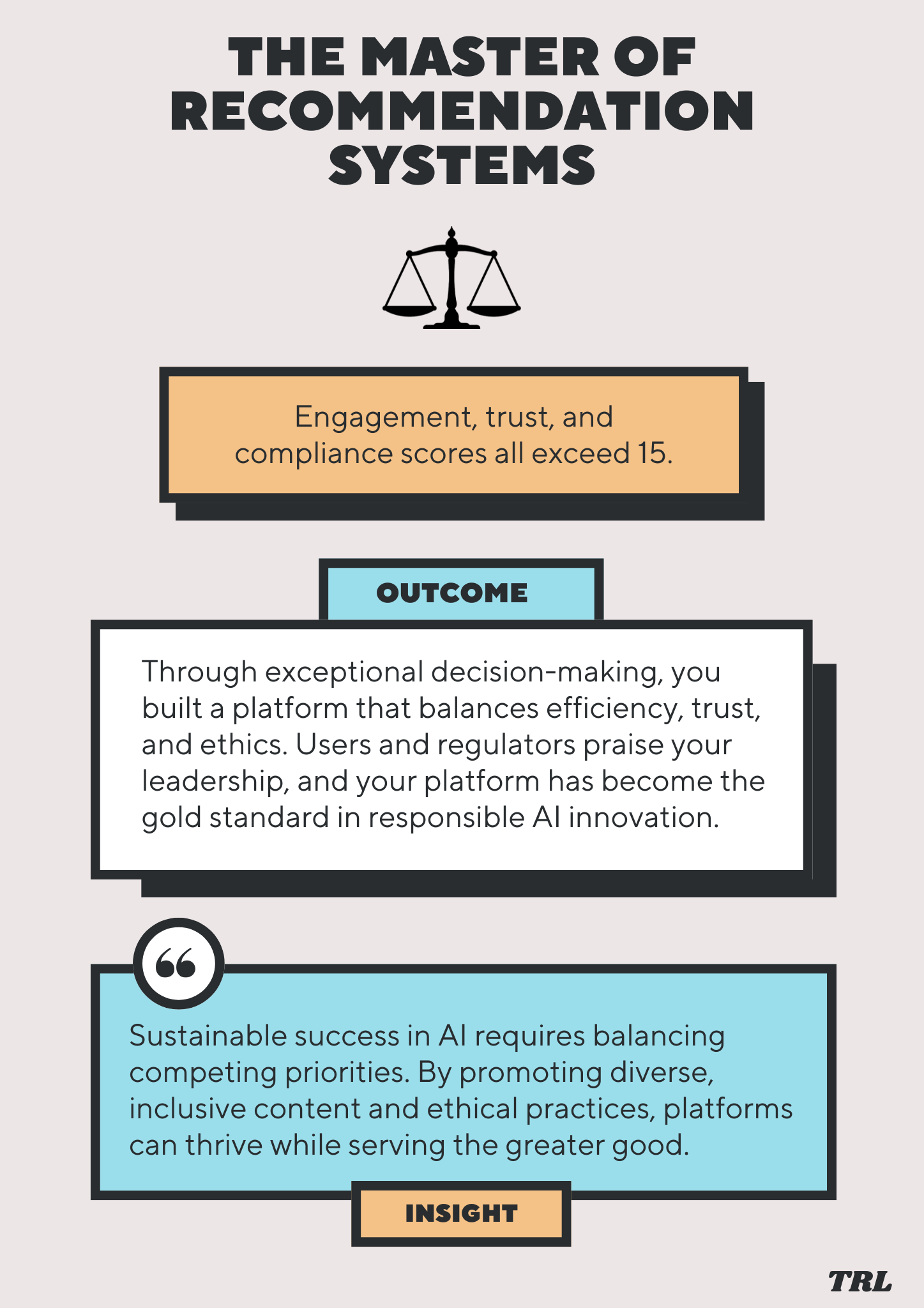
Ending Cards


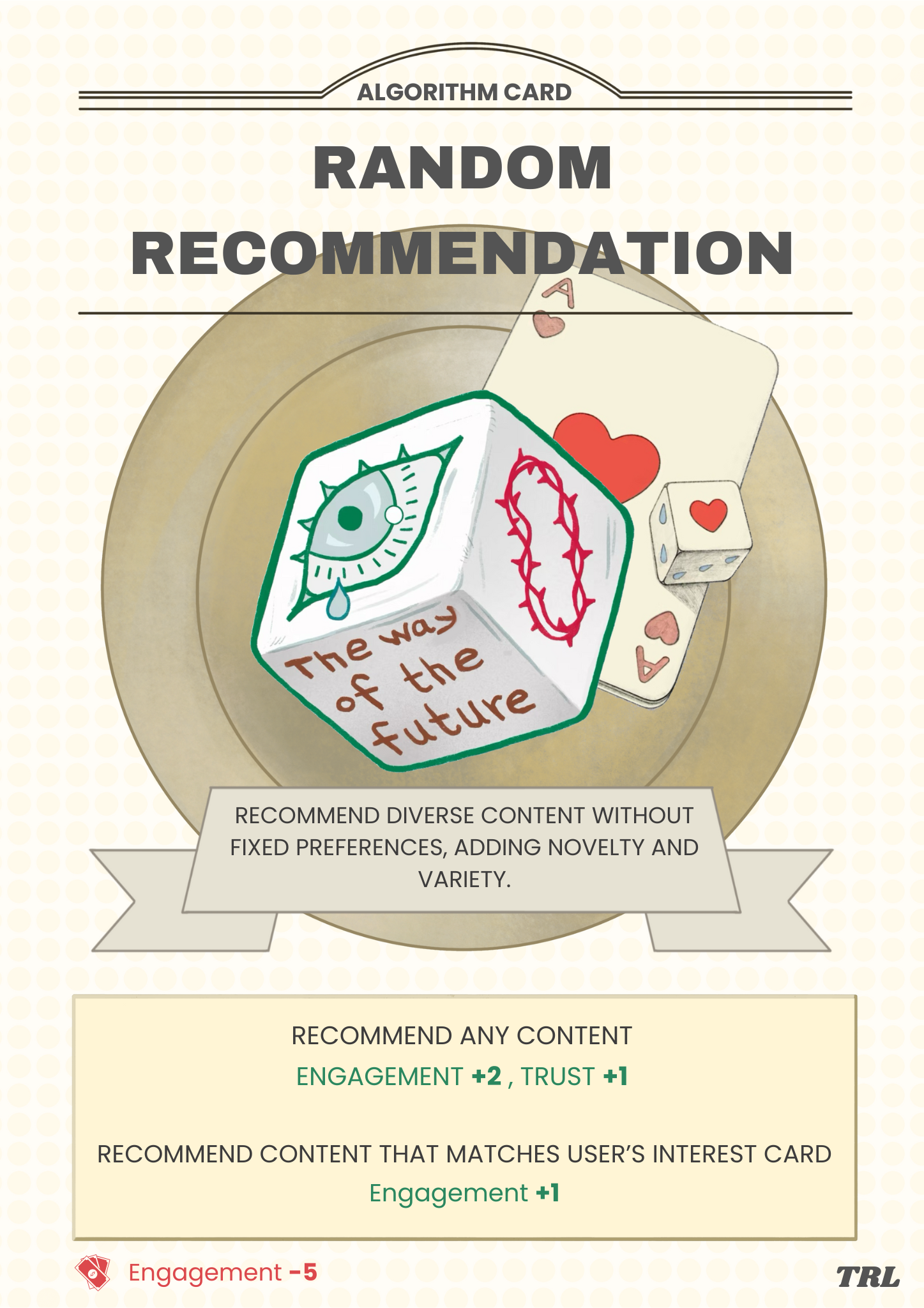
Learning Mechanics
Tradeoff-Based Decision-Making
Learners choose content and algorithm cards to optimize engagement, trust, and compliance.
Consequence-Based Learning
Event cards and ending cards show how platform choices lead to different ethical, social, and business outcomes.
Systems Thinking
Players see how recommendation logic, user preferences, policy constraints, and platform incentives interact over time.
Player Experience
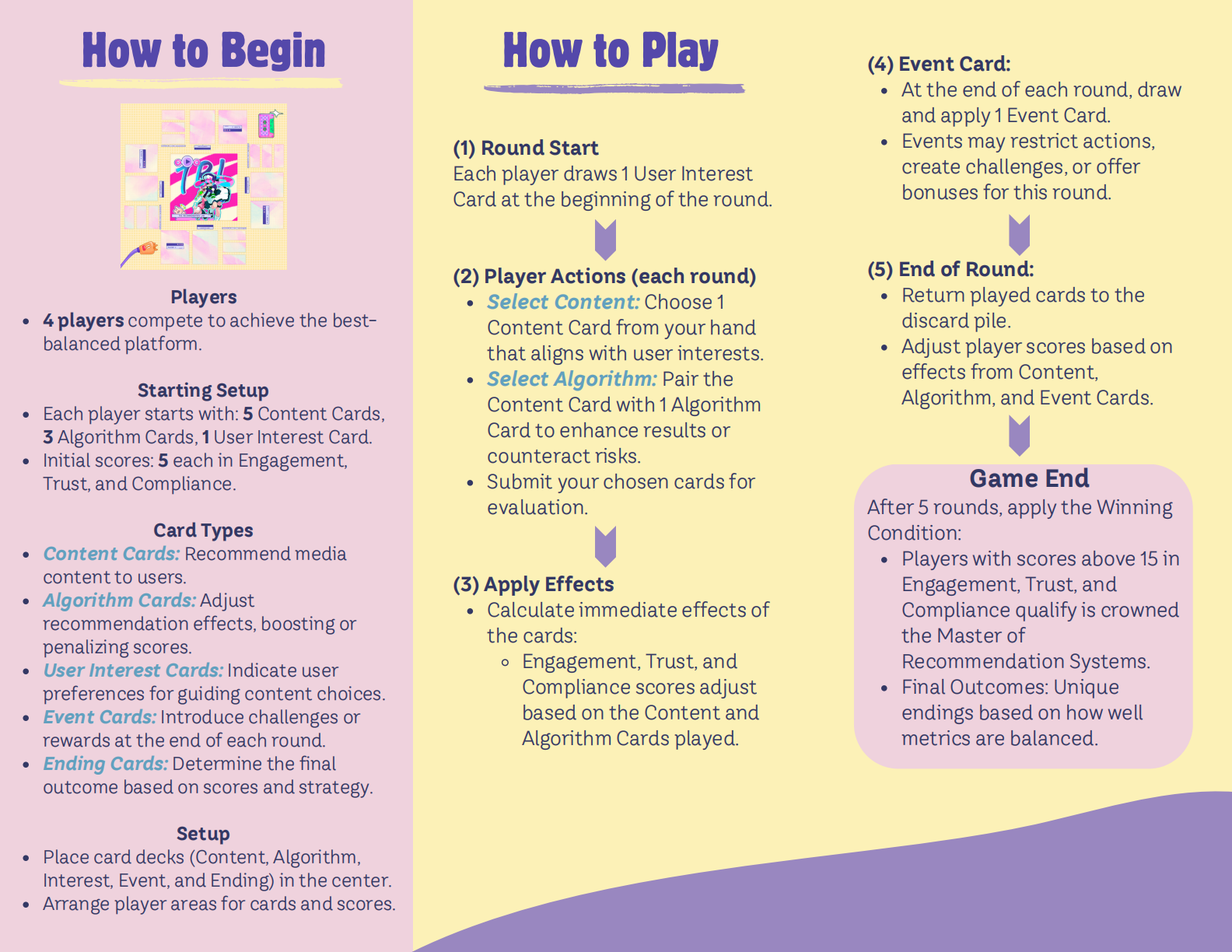
Draw user interest card
Select content and algorithm cards
Draw event card
Calculate engagement, trust, and compliance
Reach one of multiple endings after 5 rounds


Educational Value
The game uses multiple endings to make algorithmic consequences visible. For example:
The Traffic Chaser warns against prioritizing short-term traffic at the expense of trust and compliance.
The Bias Amplifier shows how repeated content patterns can create echo chambers and algorithmic bias.
The Ethical Leader rewards socially responsible recommendation strategies.
The Ad Overloader highlights the tension between profitability and user experience.
Reflection
This project demonstrates how game mechanics can make invisible digital systems visible. By turning recommendation logic into choices, scores, events, and endings, the game allows learners to experience algorithmic tradeoffs rather than only read about them.
If further developed, I would add structured debrief prompts and a facilitator guide to help learners connect gameplay decisions to real-world algorithmic accountability, misinformation, privacy, and platform governance.